

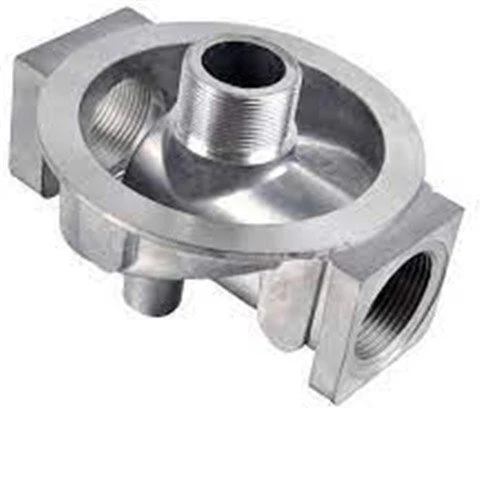

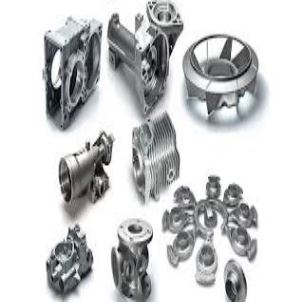

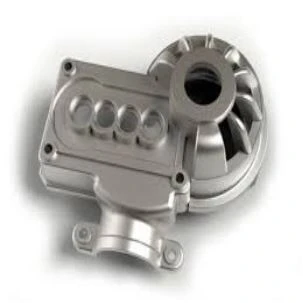
Product Introduction
Die casting is a metal casting process that is characterized by forcing molten metal under high pressure into a mould cavity. Most die castings are made from non-ferrous metals, specifically zinc, copper, aluminium, magnesium, lead, pewter, and tin-based alloys. The manufacture of parts using die casting is relatively simple. It is especially suited for a large quantity of small- to medium-sized castings, which is why to die casting produces more castings than any other casting process. Die castings are characterized by a very good surface finish (by casting standards) and dimensional consistency.
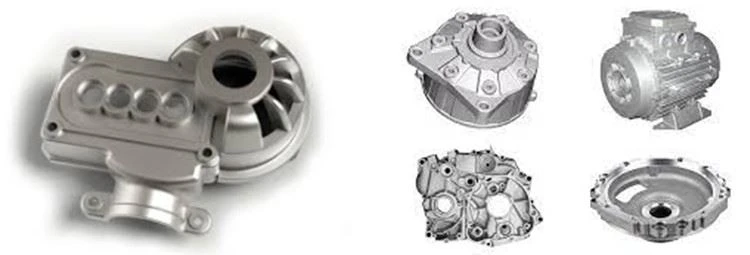
Product display
Product Feature
1. Aluminum die casting has good durability.
2. Strong stability and oxidation resistance.
3. Good shock resistance.
4. Since the toughness of aluminum is very good, it determines its plasticity and can be designed into various shapes. The ductility is particularly advantageous.
5. Aluminum die casting is relatively light
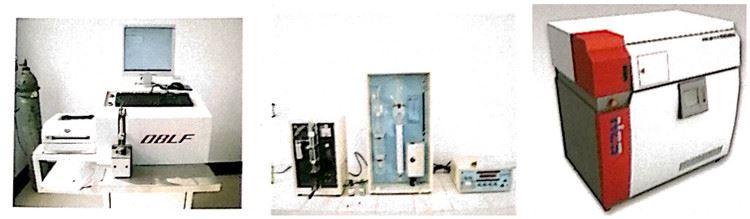
Test equipment
Advantages of Aluminium Die Casting
1. Excellent dimensional accuracy (dependent on casting material, but typically 0.1 mm for the first 2.5 cm (0.004 inch for the first inch) and 0.02 mm for each additional centimetre (0.002 inches for each additional inch).
2. Smooth cast surfaces (Ra 1–2.5 micrometres or 0.04–0.10 thou RMS).
3. Thinner walls can be cast as compared to sand and permanent mould casting (approximately 0.75 mm or 0.030 in).
4. Inserts can be cast-in (such as threaded inserts, heating elements, and high-strength bearing surfaces).
5. Reduces or eliminates secondary machining operations.
6. Rapid production rates.
7. Casting tensile strength as high as 415 megapascals (60 ksi).
8. Die casting fluid length is unaffected by solidification range, unlike permanent moulds, sand castings, and other types.
9. Corrosion rates for die castings are slower than those for sand castings due to the smoother surface of the die castings.


