
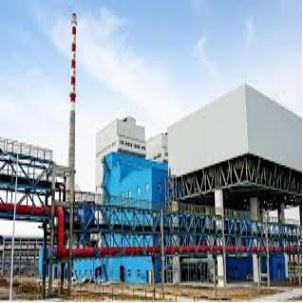
Product Introduction
Fluidization is the phenomenon by which solid particles are transported into a fluid-like state through suspension in a gas or liquid. The resultant mixing of gas and solids promotes rapid heat transfer and chemical reactions within the bed. Power plants that use this technology are capable of burning low-grade fuels at high efficiency and without the need for expensive fuel preparation. They are also smaller than the equivalent conventional furnace, so may offer significant advantages in terms of cost and flexibility.
Circulating fluidized bed is a relatively new technology with the ability to achieve lower emission of pollutants. Circulating fluidized bed coal gasification to produce clean industrial gas technology, with stable operation, wide adaptability of coal types, stable calorific value of product gas, no tar in gas, no waste water discharge, high efficiency of cold gas, low carbon content in ash, High continuous availability.
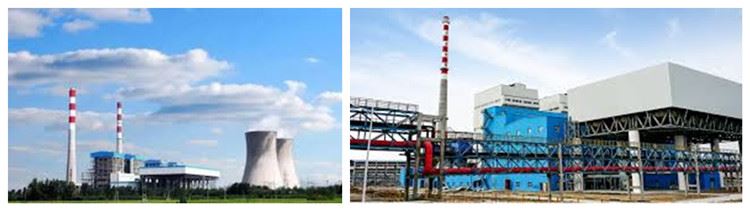
Process characteristics assessments
The circulating fluidized bed (CFB) uses high fluid velocity to provide better gas-solid contact by providing a more intense mixing of the fluid so that better quality of the product can be obtained. However, the high gas velocities and the recirculation of solids may make the CFB system much more expensive in terms of power requirement and investment compared to conventional fluidized bed reactors. CFBs have been widely used in the field of solid catalyzed gas phase reactions in the two situations below.
Continuous regeneration of catalyst, which deactivates rapidly. The solid is maintained in constant circulation where the catalyst is continuously regenerated and returned to the reactor.
Heat must be brought in or removed from a reactor. Continuous circulation of solids between vessels can efficiently transport heat from one vessel to another since solids have a relatively large heat capacity compared to gases.
One important factor of circulating systems is the ability to control the feed circulation rate. The feed circulation rate is controlled by the gas velocity in the bed which determines the flow regime and density of the bed. All the circulating systems can be characterized either by the solid circulation rate, kg/s, or the transfer ratio of the suspended materials being exchanged between vessels.
For circulating fluidized beds in coal combustion, the beds need to use a greater fluidizing speed, so the particles will remain constant in the flue gases, before moving across the combustion chamber and into the cyclone. During combustion, a dense bed is required to mix the fuel even though the solids are dispersed evenly all over the unit. The bigger particles are extracted and returned to the combustion chamber for further process, which required a relatively longer particle residence time. If the total carbon conversion efficiencies get over 98% it shows a good separation process that leaves simply a minor proportion of unburned char in the residues. During the whole process, the operating conditions are relatively uniform for the combustor.
Basis of technology
During the combustion phase, upwards jets of air will cause the solid fuels to be suspended. This is to ensure the gas and solids will mix together turbulently for better heat transfer and chemical reactions. The fuel will be burnt at a temperature of 1400 °F (760 °C) to 1700 °F(926.7 °C) to prevent nitrogen oxide from forming. While burning, flue gas such as sulfur dioxide will be released. At the same time, sulfur-absorbing chemicals such as limestone or dolomite will be used to mix with the fuel particles in the fluidization phase, which will absorb almost 95% of the sulfur pollutants.
Alternatively, the sulfur absorbing chemical and fuel will be recycled to increase the efficiency of producing higher quality steam as well as lower the emission of pollutants. Therefore, it will be possible to use circulating fluidized bed technology to burn fuel in a much more environmentally friendly method as compared to other conventional processes.
FAQ
Q1. What is the range of applications of circulating fluidized beds?
A: Circulating fluidized bed technology can be implemented in many different fields ranging from oil and gas to power stations. This technology is highly sought after due to its numerous benefits. Some of the popular applications of circulating fluidized beds are circulating fluidized bed scrubbers and circulating fluidized bed gasification systems.
Q2. What is your advantage of circulating fluidized bed?
A: The system is clean and environmentally friendly, no sewage is generated, and meets environmental protection requirements.
Q3. What can we buy from your company?
A: Fixed bed gasifier (improved gas furnace, two-stage gas furnace), circulating fluidized bed gasifier (air gasification, oxygen enrichment, pure oxygen gasification); purification equipment ( Quench towers, scrubbers, intercoolers, wet electric precipitators, electric tar traps, various types of gas special valves), various types of desulfurization equipment and systems, gas waste heat recovery systems, etc.