

Yo, what's up everyone! I'm stoked to be here to chat about one of the key things in the vehicle parts world: the difference between forged and cast axle parts. As a supplier of Axle Castings, I've seen firsthand how these two manufacturing methods can really affect the quality, performance, and cost of axle parts. So, let's dive in!
The Basics of Forging and Casting
First off, let's quickly cover what forging and casting actually are. Forging is like a blacksmith's art. It involves shaping metal by applying compressive forces, often using a hammer or a press. The metal is heated to a high temperature, making it malleable, and then pounded into the desired shape. This process can be super intense, as it requires a lot of force to reshape the metal.
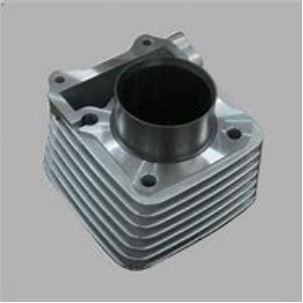

On the other hand, casting is a bit like making a Jell-O mold. You start by melting the metal, pouring it into a mold, and then letting it cool and solidify. The mold can be made from various materials, like sand or metal, and it gives the axle part its final shape. Once the metal cools, you're left with a part that matches the mold's design.
Strength and Durability
One of the biggest differences between forged and cast axle parts is their strength and durability. Forged axle parts are typically much stronger. The forging process aligns the metal's grain structure in the direction of the part's shape, which makes it more resistant to cracking and fatigue. This means that forged axles can handle more stress and strain over time, making them a great choice for heavy-duty applications like trucks, buses, and off-road vehicles.
Cast axle parts, while still strong, are not as durable as their forged counterparts. The casting process creates a random grain structure, which can result in weaker spots in the part. These weak spots can make the cast axle more prone to cracking, especially under high-stress conditions. However, for less demanding applications, like some small cars, cast axles can be a perfectly suitable option.
Cost Considerations
Cost is always a big factor when choosing between forged and cast axle parts. Forging is generally more expensive than casting. It requires more energy, specialized equipment, and skilled labor. The high-pressure machinery needed for forging can be costly to operate, and the process itself takes more time. Additionally, the raw materials used in forging are often of higher quality, which also adds to the cost.
Casting, on the other hand, is a more cost-effective option. The casting process is simpler and requires less energy, as you're just melting the metal and pouring it into a mold. The equipment needed for casting is also less expensive, and the process can be automated more easily. This makes cast axle parts a popular choice for mass-produced vehicles, where cost is a major concern.
Precision and Complexity
Another area where forged and cast axle parts differ is in precision and complexity. Forging is great for creating simple, straightforward shapes. The compressive forces used in forging can result in a rougher surface finish, and it can be challenging to create highly detailed or complex designs. However, for large, solid shapes, forging can offer excellent dimensional accuracy.
Casting, on the other hand, excels at creating complex shapes with high precision. The mold can be designed to have intricate details, allowing for the production of parts with complex geometries. This makes casting a great choice for axle parts that require detailed designs, like Automotive Mold Die Castings. Additionally, casting can achieve a smoother surface finish, which can be beneficial for parts that need to fit precisely together.
Production Volume
The production volume is also an important consideration when choosing between forged and cast axle parts. Forging is better suited for low to medium production volumes. The setup time for forging is relatively long, as the dies need to be precisely machined and the metal needs to be heated to the right temperature. This makes forging less efficient for high-volume production.
Casting, on the other hand, is ideal for high-volume production. Once the mold is created, the casting process can be repeated quickly and efficiently. This makes casting a great choice for mass-producing axle parts, like Engine Camshaft Castings. The ability to produce large quantities of parts in a short amount of time helps to keep the cost down.
Application in Different Vehicles
The choice between forged and cast axle parts also depends on the type of vehicle. For heavy-duty vehicles, such as trucks and construction equipment, forged axles are usually the preferred choice. The high strength and durability of forged axles can withstand the heavy loads and harsh operating conditions these vehicles face.
For passenger cars and light trucks, both forged and cast axles can be used. In some cases, cast axles are used for the front axle, while forged axles are used for the rear axle, depending on the vehicle's design and requirements. For motorcycles, Motorcycle Oil Cylinder and other parts are often made using casting techniques due to their ability to create complex shapes with high precision.
Conclusion
In conclusion, the difference between forged and cast axle parts boils down to a few key factors: strength, durability, cost, precision, complexity, and production volume. If you need a strong, durable axle for a heavy-duty application, forging is the way to go. But if you're looking for a cost-effective option for mass production or need a part with a complex shape, casting might be the better choice.
As a supplier of Axle Castings, I've got the expertise and resources to help you choose the right axle parts for your needs. Whether you're in the automotive, motorcycle, or heavy equipment industry, I can provide high-quality cast axle parts that meet your specifications. If you're interested in learning more or want to discuss your axle part requirements, don't hesitate to reach out. Let's work together to find the perfect solution for your business!
References
- Metals Handbook Committee. (2002). Metals Handbook: Casting. ASM International.
- Kalpakjian, S., & Schmid, S. R. (2013). Manufacturing Engineering and Technology. Pearson.


